

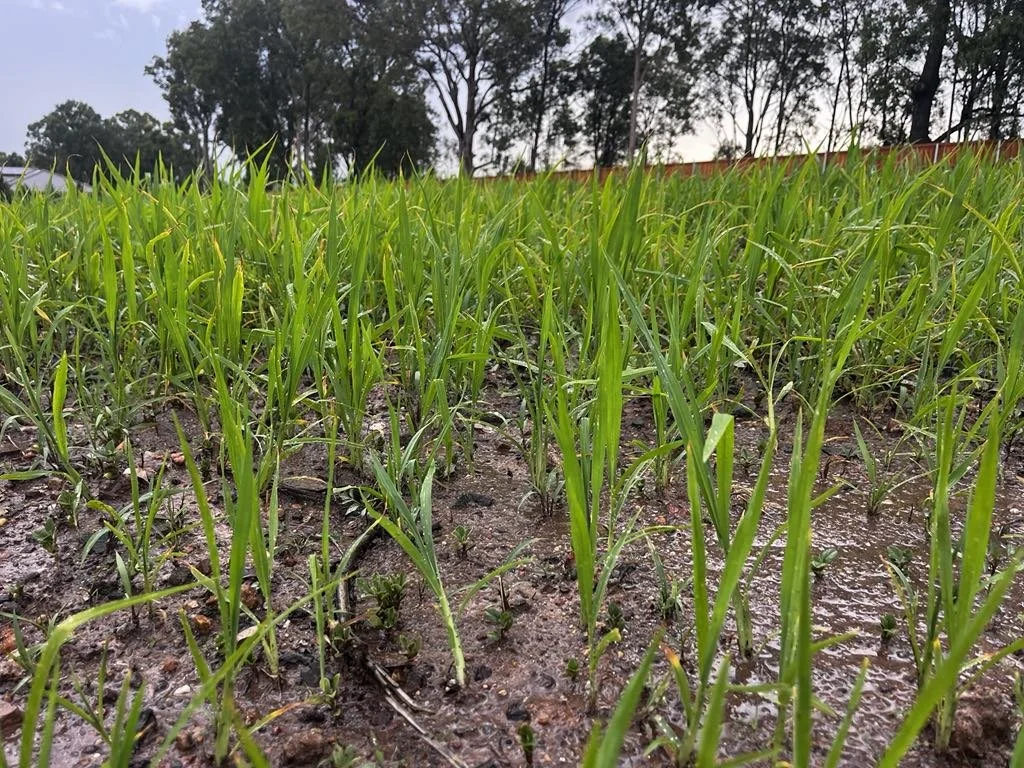
Rhodes Grass
About Rhodes Grass
Rhodes Grass (Chloris gayana) is a hardy, fast-growing, warm-season perennial grass known for its excellent drought tolerance and adaptability. It establishes quickly from seed, spreads via stolons, and forms a thick, deep-rooted sward that is ideal for erosion control, pasture production, and revegetation projects.
With its strong resilience and low maintenance needs, Rhodes Grass is widely used across Australia in both rural and civil applications.
Best Uses & Applications
Pasture and fodder production for cattle and livestock
Erosion control and revegetation of disturbed or sloped lands
Ideal for rural properties, civil works, mine sites, pipeline corridors, and road batters
Great for low-input areas where durability is needed
Growth Timeline & Establishment
Germination: 5–10 days under ideal warm conditions
Establishment: 3–6 weeks for solid early growth
Full cover typically forms in 6–10 weeks, with strong root development aiding erosion control
Spreads via stolons, improving coverage over time
Best Time to Hydroseed This Grass
Spring through to early summer is ideal, when soil temperatures are warm (above 18°C)
Can also be sown in early autumn in warmer climates
Requires adequate warmth and moisture during germination for best results
Best Locations & Soil Conditions
Grows well in a wide range of soils including loam, sandy, and light clay
Performs best in full sun, with strong drought and heat tolerance
Tolerates saline and low-fertility soils better than many other grass types
Not ideal for shaded areas or cold climates
Aftercare Tips
Watering: Keep moist during germination; once established, it is drought-tolerant and low-maintenance
Mowing: Maintain at 6–10cm height; occasional mowing encourages denser growth
Fertilising: Use a starter fertiliser at sowing; follow up with nitrogen-based fertiliser after 4–6 weeks
Weed control: Monitor in early stages; mulch or hydro-mulch helps reduce weed competition
Grazing (for pasture use): Wait until grass is well established before first grazing, then rotationally graze to maintain health