

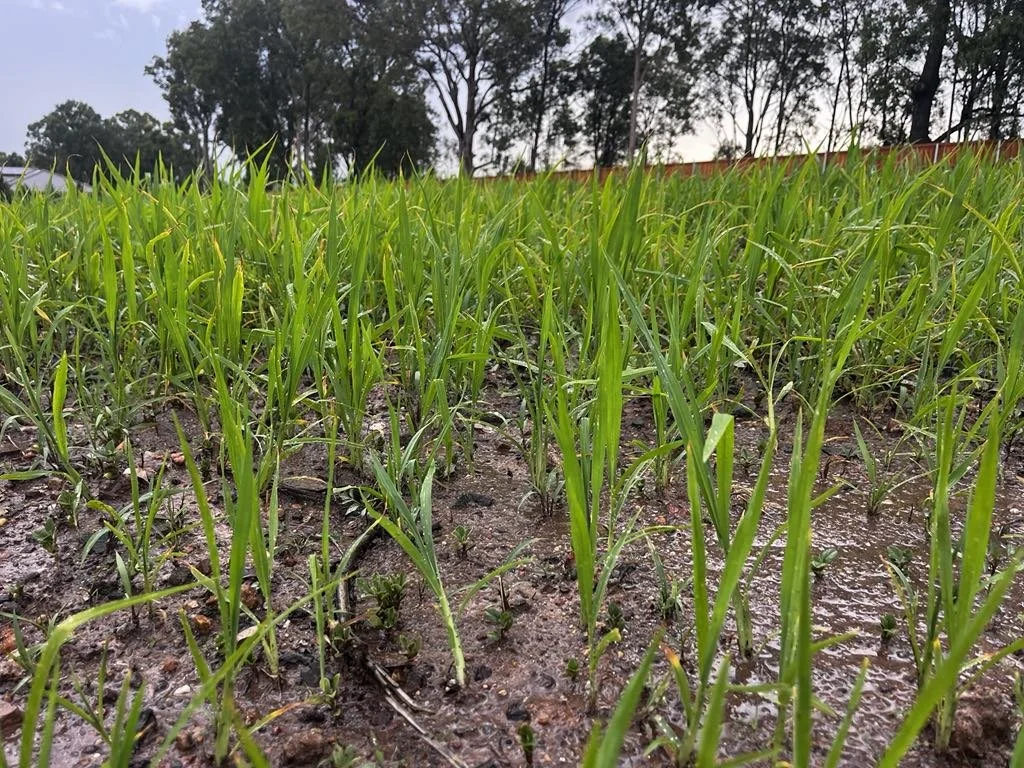
Clover Grass
About Clover Grass
Clover is a nutrient-rich legume commonly blended with other grasses or used on its own in pastures, erosion control areas, and revegetation projects. With its natural nitrogen-fixing properties, clover enhances soil health and reduces the need for synthetic fertilisers. There are multiple varieties available, with White Clover and Subterranean Clover being the most widely used in Australia.
Best Uses & Applications
Ideal for pasture improvement, revegetation, and erosion control
Commonly included in blends with ryegrass or kikuyu for added soil fertility
Useful in cover cropping, groundcover, and eco-restoration projects
Excellent for low-maintenance lawns, grazing, or companion planting
Growth Timeline & Establishment
Germination: 7–14 days
Full establishment: 4–8 weeks depending on conditions
Clover spreads horizontally and creates a dense mat, ideal for weed suppression and moisture retention
Best Time to Hydroseed This Grass
Autumn and early spring are ideal planting times
Clover prefers cooler temperatures and consistent moisture
Not suited to high heat or drought conditions during early growth stages
Best Locations & Soil Conditions
Thrives in moist, fertile soils with good drainage
Performs well in loamy to light clay soils
Excellent for pastures, urban green spaces, roadside verges, and slopes
Tolerates slightly acidic to neutral pH levels
Aftercare Tips
Watering: Regular watering until established; once rooted, clover is relatively drought-tolerant
Fertilising: Avoid high-nitrogen fertilisers—clover fixes its own nitrogen
Mowing: Can be mowed low or left natural depending on the use
Weed Control: Its dense growth naturally suppresses weeds, but monitor during establishment
Reseeding: Often self-regenerates if allowed to flower and reseed